

The Extended Brain
Tools for meeting your performance goals

I ran the Philly Marathon last year with a playlist made specifically for race day. It starts out steady ( e.g., “Sons and Daughters” by The Decemberists), moves to slightly more upbeat (“I Can Do It With a Broken Heart” by Taylor Swift), and ends with pump up songs (“Unstoppable” by Sia).
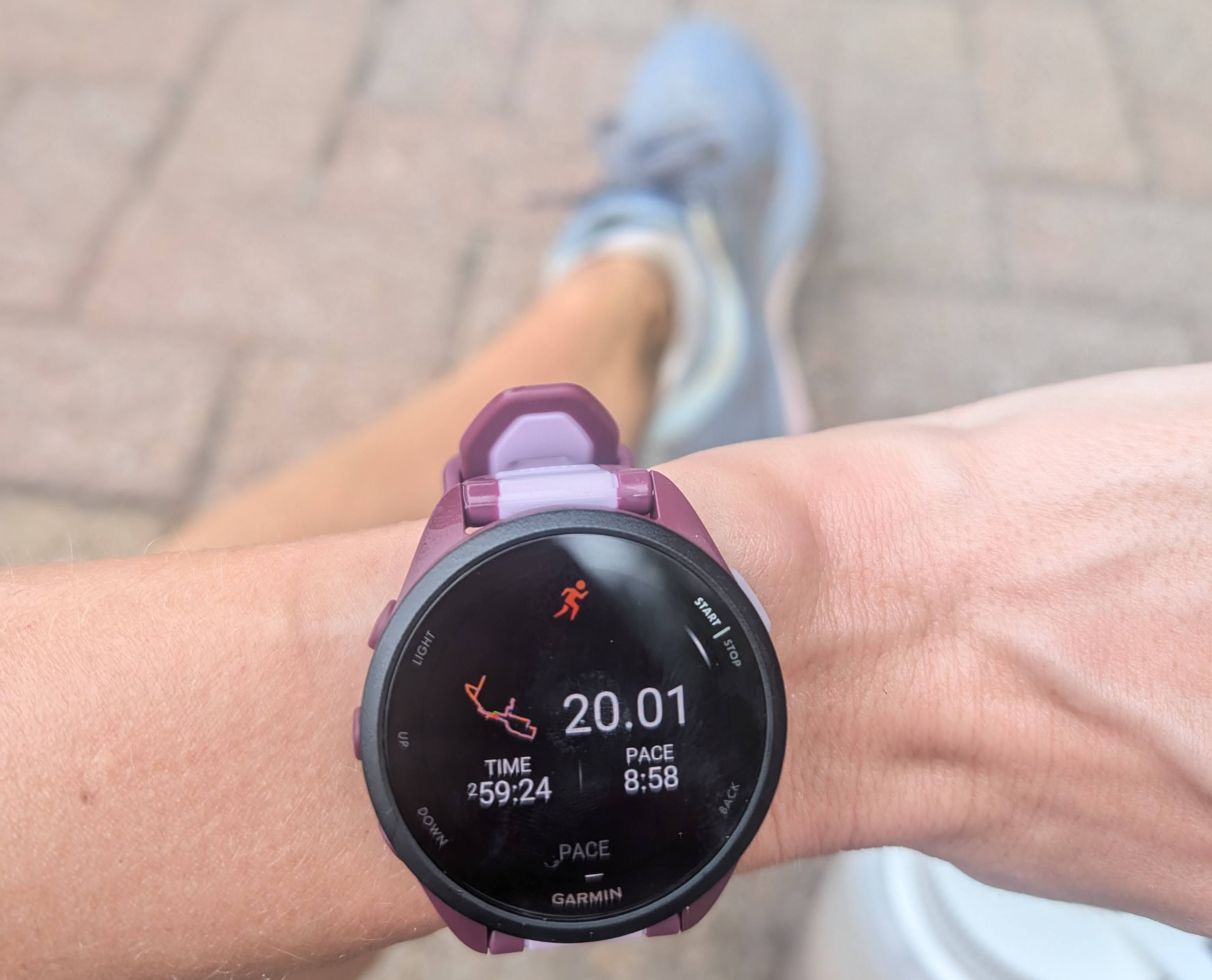
I used the playlist again this weekend for a progression run - five miles at easy pace followed by two miles faster. Switching pace is made a lot easier by switching from the slower songs at the beginning of the playlist to the faster songs at the end.
Using music as an external aid to help pace my runs came to mind when I listened to a seminar on the extended brain earlier this week. This theory essentially says that we can use other people’s minds, our body, externalizing/physical space, and technology to help our cognitive processes and act as extensions of our minds.
Using music or a watch to monitor and control running speed are examples of technology extending the mind. Alternatively, runners will learn the feel of a given pace, using the body to extend the mind.
The extended mind theory has its defenders and its detractors, but I think it offers a useful framework for thinking about the tools we can use to perform the way we want. I can think of so many examples in different domains of my life. For consulting work I rely on Google calendar and scheduling links (technology), colleagues with different experiences (other people’s minds), and coffee shops with their hum of energy (physical space). For coaching I might use mind mapping (externalizing) or physical cues that communicate more than words (the body).
The key to using any tool, however, is balance. Signals from multiple places keep us moving in our intended direction, like paddling on both sides of the canoe. If one tool becomes too powerful, we end up going in circles.
When coaching, I need to take in data from both what the person is saying and what their physical cues are showing. When trying to run a certain pace, I need to pay attention to what my watch says and how my body is feeling that day. Relying on one of these things alone can lead me to miss information that could lead to an a-ha moment for a client or get the benefit I’m aiming for from a given workout.
During the marathon last year, I started out with my first playlist “Marathon Jams” and it really helped me along for a while. But once I’d run through it and still had miles to go, it was time to switch to my “UP” playlist - pump up songs only. I made that playlist knowing that at a certain point in the race, my mind would no longer be very reliable at keeping me going, so the music would have to play an important role. To use a metaphor from the seminar I attended this week, I employed my brain as a conductor rather than a workhorse to achieve the performance I was hoping for.
What parts of the extended brain - other people’s mind, our body, externalizing/physical space, and technology - do you use in your professional and personal lives? Do you rely too heavily on any? Are there any that you’d like to experiment with more?